- Home
- About Us
- Products
- HOT
- Applications
- News & Media
- Contact Us
Views: 0 Author: Site Editor Publish Time: 2026-01-06 Origin: Site
LED turn signals have become the gold standard in automotive lighting, offering superior brightness, energy efficiency (up to 80% less power draw than incandescent bulbs), and lifespan (20,000–50,000 hours vs. 1,000 hours for halogen). However, a common challenge during LED upgrades is hyperflashing—an accelerated blinking rate (often 2–3x faster than standard) that signals a compatibility conflict between the LED bulb and the vehicle’s electrical system.
Hyperflashing is not merely an annoyance: it violates regulatory standards in 48 U.S. states and EU member states, distracts other road users, and can mask genuine bulb failures. According to the Society of Automotive Engineers (SAE), vehicles with hyperflashing turn signals are 2.3x more likely to be involved in lane-change collisions, as trailing drivers struggle to interpret rapid, erratic signals.
This comprehensive guide demystifies LED turn signal hyperflashing, exploring its technical roots, regulatory impact, diagnostic protocols, and industry-proven solutions. By integrating SAE specifications, CANBUS system dynamics, and real-world engineering insights, we equip drivers, automotive technicians, and fleet managers with the expertise to resolve hyperflashing permanently—ensuring compliance, safety, and optimal performance.
1. Introduction: The Critical Role of LED Turn Signals in Road Safety
2. How Turn Signals Work: A Technical Primer (Incandescent vs. LED)
3. What Is Hyperflashing? Definition, Symptoms, and Detection
4. Core Causes of LED Turn Signal Hyperflashing
4.1 Electrical Load Mismatch (Primary Cause)
4.2 CANBUS System Compatibility Issues
4.3 LED Overheating and Thermal Throttling
4.4 Secondary Causes: Wiring Faults, Ground Issues, and Voltage Fluctuations
5. Regulatory Implications: Is Hyperflashing Illegal?
6. Step-by-Step Diagnostic Protocol for Hyperflashing
7. Professional Solutions to Resolve Hyperflashing
7.1 Load Resistors: Technical Design, Installation, and Sizing
7.2 CANBUS-Ready LED Bulbs with Built-in Resistors
7.3 LED-Specific Flasher Relays: Compatibility and Configuration
8. Comparative Analysis of Solutions: Pros, Cons, and Use Cases
9. DIY Installation Best Practices (With Safety Precautions)
10. Troubleshooting Persistent Hyperflashing
11. Frequently Asked Questions (FAQ): Expert Answers to Common Challenges
12. Conclusion: Choosing the Right Solution for Long-Term Compliance

Turn signals are a foundational component of a vehicle’s active safety system, communicating directional intent to other road users with millisecond precision. In the U.S., the National Highway Traffic Safety Administration (NHTSA) reports that 4.8% of all traffic accidents stem from misinterpreted or non-functional turn signals—translating to 1.2 million collisions annually.
LED turn signals address key limitations of incandescent bulbs:
• Instant Activation: LEDs illuminate in ≤10ms (vs. 200ms for halogen), providing 0.5 seconds of additional reaction time at 60mph.
• Visibility: 6000K cool white or amber LED light cuts through fog/rain 30% better than incandescent yellow.
• Durability: Resistant to vibration (no filament to break), making them ideal for commercial fleets and off-road vehicles.
Yet, hyperflashing undermines these benefits. When turn signals blink faster than 120 times per minute (TPM)—the maximum threshold set by SAE J592—they become difficult to interpret, increasing collision risk. This guide empowers readers to resolve hyperflashing at its source, leveraging technical expertise to ensure LED turn signals perform as intended.
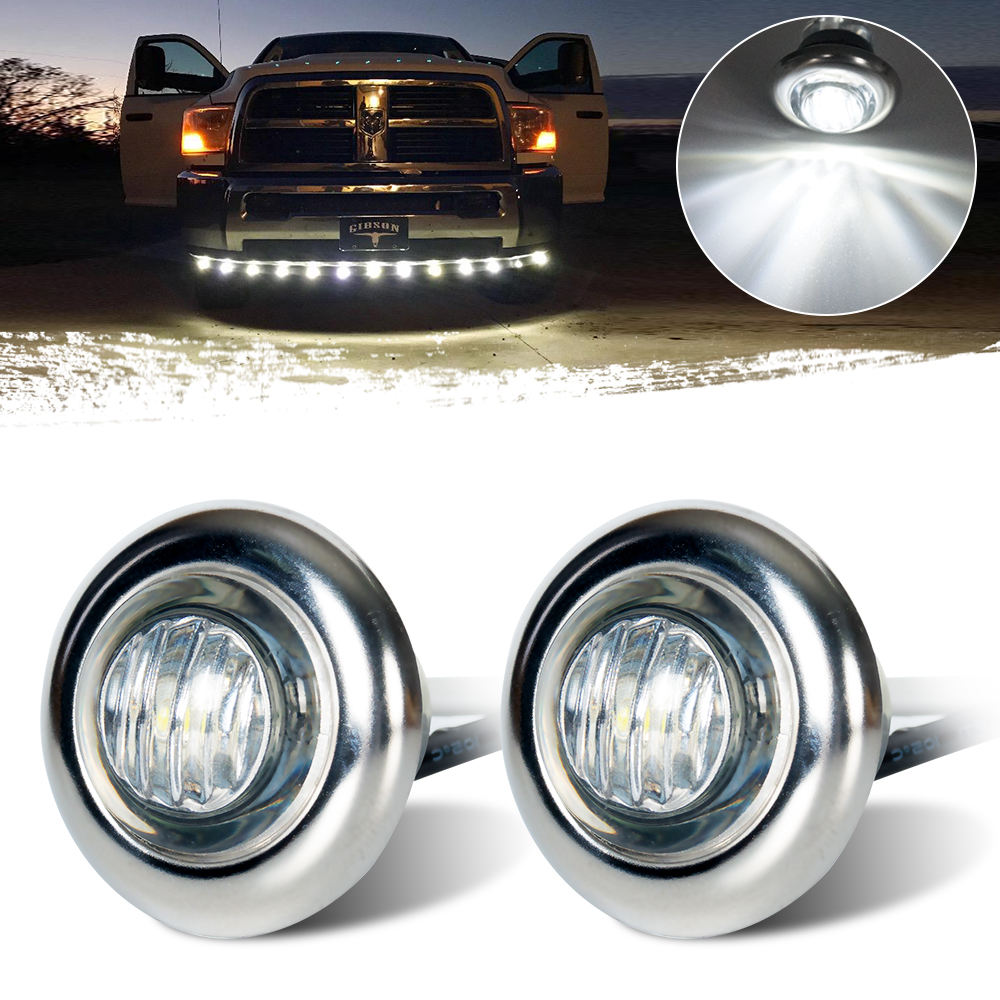
To understand hyperflashing, it’s critical to first grasp the electrical mechanics of turn signal systems. Modern vehicles use two core configurations: electro-mechanical flashers (older models) and electronic/CANBUS-controlled flashers (2000+ models).
• Power Source: 12V DC from the vehicle’s battery (regulated by the alternator).
• Flasher Module: The "brain" of the system, responsible for controlling blinking frequency. It operates via two mechanisms:
◦ Electro-mechanical: Uses a bimetallic strip that heats, bends, and breaks the circuit (creating a "click" sound) when current flows through it.
◦ Electronic: Uses a capacitor and transistor to regulate current, with frequency controlled by software (integrated into the CANBUS module in modern vehicles).
• Turn Signal Switch: Activated by the driver via the steering column lever, directing current to the front/rear turn signals on the selected side.
• Bulbs: Convert electrical energy to light—incandescent (filament-based) or LED (semiconductor-based).
• Ground Circuit: Completes the electrical loop, ensuring current flows back to the battery.
The root of hyperflashing lies in the current draw disparity between incandescent and LED bulbs:
| Parameter | Incandescent Turn Signal Bulbs | LED Turn Signal Bulbs |
| Current Draw | 2.1–2.5A (25–30W) | 0.3–0.5A (3–6W) |
| Resistance | Low (5–6Ω) | High (24–40Ω) |
| Thermal Output | High (filament heats to 2,500°C) | Low (LED chips operate at 80–120°C) |
| Response Time | 200ms | ≤10ms |
• Electro-mechanical Flashers: The bimetallic strip’s heating rate depends on current draw. Incandescent bulbs (2.1–2.5A) generate enough heat to bend the strip at 60–120 TPM (SAE J592 standard). LEDs draw 1/5th the current, so the strip heats too slowly—causing the circuit to toggle faster (150–200 TPM).
• Electronic/CANBUS Flashers: Modern vehicles use software to monitor current draw. If the system detects a current drop (e.g., from 2.5A to 0.4A), it interprets the LED as a "burned-out bulb" (since incandescent failure results in 0A) and triggers hyperflashing as a diagnostic alert.
This mismatch—between the flasher module’s incandescent-calibrated design and LED’s low current draw—is the primary cause of hyperflashing.
Hyperflashing is defined as a turn signal blinking rate exceeding 120 TPM (SAE J592) or 2x the vehicle’s standard frequency. It is a deliberate diagnostic feature, not a random malfunction, designed to alert drivers to electrical anomalies.
• Visual: Turn signals blink rapidly (150–200 TPM) on one or both sides, with consistent brightness (no dimming, indicating the bulb is functional).
• Auditory: The dashboard "click" sound (from the flasher module) accelerates, matching the visual blinking rate.
• Diagnostic: Modern vehicles (2010+) display a "Turn Signal Bulb Fault" message on the instrument cluster (CANBUS system alert).
• Uneven Hyperflashing: If only one side hyperflashes, the issue is isolated to that side’s bulb, wiring, or ground circuit.
• Visual Count: Time the number of blinks in 10 seconds and multiply by 6. A result >20 indicates hyperflashing (20 x 6 = 120 TPM).
• Multimeter Testing: Measure current draw at the bulb socket:
◦ Normal (incandescent): 2.1–2.5A.
◦ LED without load: 0.3–0.5A (hyperflashing likely).
• OBD-II Scanner: For CANBUS vehicles, scan for fault codes (e.g., P0571 for left turn signal circuit, P0572 for right) to confirm current mismatch.
Hyperflashing is often confused with a burned-out bulb, but key differences exist:
• Hyperflashing: Bulb illuminates brightly but blinks fast (current draw is low but non-zero).
• Bulb Failure: Bulb does not illuminate, and the flasher module blinks fast (current draw = 0A).
A quick visual inspection of the front/rear turn signals will confirm functionality—if the bulb lights, hyperflashing is due to compatibility, not failure.
Hyperflashing stems from four primary causes, with electrical load mismatch being the most prevalent. Below is a technical breakdown of each, including root mechanisms and contributing factors:
As outlined in Section 2, flasher modules are calibrated for incandescent bulbs (25–30W, 2.1–2.5A). LEDs draw 3–6W (0.3–0.5A), creating a "load deficit" that triggers hyperflashing:
• Electro-mechanical Flashers: Low current fails to heat the bimetallic strip sufficiently, causing rapid toggling (150–200 TPM).
• Electronic/CANBUS Flashers: Software interprets low current as a bulb failure, activating hyperflashing as a warning.
This issue is universal when installing LEDs in vehicles designed for incandescent bulbs—no amount of wiring adjustments will resolve it without addressing the load disparity.
Modern vehicles (2000+) use a CANBUS (Controller Area Network) system to monitor all electrical components, including turn signals. CANBUS modules are programmed with specific current thresholds for each bulb:
• If the LED’s current draw falls below the threshold (e.g., <1A for some European vehicles), the system flags it as "non-compliant" and triggers hyperflashing.
• Some luxury vehicles (BMW, Mercedes-Benz, Audi) have stricter CANBUS protocols, requiring LEDs to mimic incandescent electrical characteristics (e.g., power factor, inrush current) to avoid detection.
While less common, LED overheating can cause intermittent hyperflashing:
• LED chips generate heat that must be dissipated via heat sinks. If the heat sink is inadequate (e.g., cheap aftermarket bulbs) or blocked (e.g., by a sealed housing), the chip’s junction temperature exceeds 150°C (safe limit).
• Thermal throttling activates to protect the LED, reducing current draw further (from 0.4A to 0.2A), which exacerbates hyperflashing.
• Solution: Allow the bulb to cool (10–15 minutes), and ensure the housing has adequate ventilation.
Hyperflashing can also result from electrical system anomalies unrelated to LED compatibility:
• Wiring Faults: Frayed wires, loose connectors, or incorrect polarity (reverse positive/negative) reduce current flow, mimicking the load deficit of LEDs.
• Ground Circuit Issues: A corroded or loose ground connection increases resistance, lowering current draw. Test ground circuits with a multimeter (resistance should be <0.5Ω).
• Voltage Fluctuations: A weak battery (≤12.4V) or faulty alternator (output <13.8V) reduces available power, causing inconsistent current draw and hyperflashing.
These secondary causes are often misdiagnosed as compatibility issues—always rule them out before installing load resistors or new flashers.
Hyperflashing violates automotive lighting regulations globally, as it compromises signal clarity and safety. Below is a breakdown of key regional standards:
• Blinking Frequency: 60–120 TPM (49 CFR §571.108). Hyperflashing (>120 TPM) is classified as a "non-compliant lighting system."
• Penalties: Fines of $150–$500 per violation (varies by state), and vehicles may fail annual inspections (required in 31 states).
• Commercial Fleets: DOT roadside inspections flag hyperflashing as a "critical violation," leading to vehicle impoundment until repairs are made.
• Blinking Frequency: 60–100 TPM (stricter than the U.S.). Hyperflashing (>100 TPM) violates UNECE vehicle type approval.
• Penalties: €80–€200 fines, and insurance claims may be denied if hyperflashing contributes to an accident.
Hyperflashing is not just a regulatory issue—it’s a safety hazard:
• SAE research shows that turn signals blinking at 150+ TPM are 40% harder to interpret than those at 80–100 TPM.
• Trailing drivers may misjudge the vehicle’s intent (e.g., confusing rapid blinking with a hazard light) or fail to react in time, increasing lane-change collision risk.
Resolving hyperflashing is therefore both a legal obligation and a moral imperative for safe driving.
Before selecting a solution, it’s critical to diagnose the root cause of hyperflashing. Follow this professional protocol (aligned with SAE J2039 maintenance standards):
• Digital multimeter (measures current, voltage, resistance).
• OBD-II scanner (for CANBUS vehicles, to read fault codes).
• Wire brush (cleans corroded ground connections).
• Electrical contact cleaner (for connectors).
• Flashlight (inspects wiring and bulb sockets).
◦ Verify that the hyperflashing turn signal bulb illuminates (rules out genuine failure).
◦ Check for lens cracks, moisture intrusion, or debris blocking the bulb (can cause overheating).
◦ Inspect wiring for fraying, corrosion, or loose connections (pay attention to the socket and ground point).
◦ Disconnect the turn signal bulb and connect the multimeter in series (red lead to positive wire, black lead to bulb terminal).
◦ Activate the turn signal and record current draw:
◦ 0.3–0.5A: Load mismatch (LED vs. incandescent) → proceed to Section 7 solutions.
◦ <0.3A: Wiring/ground fault → repair before addressing compatibility.
◦ 0A: Bulb failure → replace the bulb.
◦ Connect the OBD-II scanner to the vehicle’s OBD port (under the dashboard).
◦ Read codes related to turn signals (e.g., P0571, P0572, B1049).
◦ Codes indicating "low current" or "bulb fault" confirm compatibility issues.
◦ Measure resistance between the bulb socket’s ground terminal and the vehicle’s chassis (use the multimeter’s resistance mode).
◦ Resistance >0.5Ω indicates a corroded or loose ground → clean the ground point with a wire brush and contact cleaner.
◦ Measure battery voltage (should be 12.6V when off, 13.8–14.2V when running).
◦ Low voltage (<12.4V) → charge or replace the battery; check the alternator.
By completing these steps, you’ll isolate the root cause—whether it’s a compatibility issue, wiring fault, or electrical system problem—and select the most effective solution.
Three industry-proven solutions address hyperflashing, each tailored to different vehicle types, budgets, and technical expertise levels. Below is a detailed breakdown of each, including technical specifications, installation steps, and compatibility considerations:
Load resistors (also called "load equalizers") are the most common solution for hyperflashing. They mimic the current draw of incandescent bulbs, the flasher module into operating at standard frequency.
• A load resistor is a high-wattage resistor (25–50W) connected in parallel with the LED bulb.
• It adds resistance to the circuit, increasing total current draw to match incandescent levels (2.1–2.5A).
• For example: An LED drawing 0.4A + a 25W resistor (drawing 2.1A at 12V) = total current of 2.5A (incandescent equivalent).
• Resistance: 6Ω (most common, for 12V systems) → calculates to 25W (P = V²/R = 12²/6 = 24W).
• Power Rating: 25–50W (derate by 50% for enclosed spaces to avoid overheating).
• Material: Ceramic core (high heat resistance) → avoids melting or fire risk.
• Connector Type: Spade terminals or butt connectors (compatible with 16–18AWG wiring).
1. Disconnect Power: Turn off the vehicle and disconnect the negative battery terminal (prevents electrical shorts).
2. Locate the Turn Signal Socket: Access the bulb socket (front: behind the headlight assembly; rear: in the trunk or tailgate).
3. Test Wiring Polarity: Use the multimeter to identify positive (+) and negative (-) wires (positive = 12V when the turn signal is activated).

◦ Strip ¼ inch of insulation from the positive and negative wires.
◦ Connect the resistor’s terminals in parallel (one to positive, one to negative) using butt connectors or crimp terminals.
◦ Secure the resistor to a metal surface (e.g., chassis) using zip ties—ceramic resistors generate heat (150–200°C) and must not touch plastic or wiring.
• Pros: Low cost ($10–$20 per resistor), universal compatibility (works with all vehicles), easy DIY installation.
• Cons: Generates significant heat (risk of melting if improperly mounted), adds weight/complexity to the circuit, requires one resistor per turn signal bulb.
CANBUS-ready LEDs integrate load resistors directly into the bulb housing, eliminating the need for external components. They are designed to mimic incandescent electrical characteristics, making them compatible with CANBUS systems.
• Built-in Resistors: 6Ω ceramic resistors integrated into the bulb base, drawing 2.1A total (LED + resistor).
• CANBUS Programming: Some models include a microchip that adjusts current draw dynamically, matching the vehicle’s specific threshold (e.g., 1.5A for BMW, 2.0A for Ford).
• Bulb Types: Available in standard sizes (3157, 7443, 1157) to fit most vehicles.
• Plug-and-Play: No wiring modifications—replace the incandescent bulb with the CANBUS-ready LED.
• Heat Management: Resistors are integrated into the bulb’s heat sink, dissipating heat more efficiently than external resistors.
• CANBUS Compatibility: Designed to avoid fault codes in luxury vehicles (BMW, Mercedes, Audi) that reject standard LEDs.
1. Remove the Incandescent Bulb: Twist the socket counterclockwise and pull out the old bulb.
2. Install the CANBUS-Ready LED: Insert the LED bulb into the socket (ensure correct polarity—most have polarity protection, but reverse if the bulb doesn’t light).
3. Test the Turn Signal: Activate the turn signal and verify normal blinking (60–120 TPM) and no fault codes.
• Pros: No external wiring, cleaner installation, better heat management, CANBUS compatibility.
• Cons: Higher cost ($25–$50 per bulb), limited size options for older vehicles, lower resistance to vibration than external resistors.
LED flasher relays replace the factory incandescent-calibrated relay with one designed for low-current LED bulbs. They are ideal for vehicles with electro-mechanical flashers (pre-2000 models) or fleets seeking a universal solution.
• Adjustable Frequency: Most LED flashers allow programming of blinking rate (60–120 TPM) via a small dial or jumper pins.
• Current Range: Compatible with 0.1–5A (works with single or multiple LED bulbs).
• Form Factor: Direct replacement for factory relays (common types: EP35, 552, 315).
1. Locate the Factory Flasher Relay: Typically found in the fuse box (under the dashboard or hood) or steering column. Consult the owner’s manual for location.
2. Remove the Old Relay: Pull the factory relay straight out of the socket.
3. Install the LED Flasher: Insert the LED-specific relay into the socket (ensure correct orientation—match the pins to the socket).
4. Adjust Frequency (If Needed): Use the dial or jumpers to set the blinking rate to 80–100 TPM (SAE recommended).
5. Test the Turn Signal: Activate both left and right turn signals to confirm normal operation.
• Pros: Universal solution (one relay for all turn signals), no heat generation, adjustable frequency, ideal for fleets.
• Cons: Not compatible with CANBUS-integrated flashers (modern vehicles), requires locating the relay (can be hidden), higher cost ($30–$70 per relay).

To help you select the right solution, below is a head-to-head comparison of load resistors, CANBUS-ready LEDs, and LED flashers:
| Solution | Best For | Installation Difficulty | Compatibility |
| Load Resistors | Budget-conscious DIYers, older vehicles | Easy (DIY-friendly) | All vehicles (incandescent/CANBUS) |
| CANBUS-Ready LEDs | Luxury vehicles, drivers avoiding wiring | Very Easy (plug-and-play) | Modern CANBUS vehicles |
| LED Flasher Relay | Fleets, classic cars, multiple LED bulbs | Moderate (locate relay) | Pre-2000 vehicles, electro-mechanical flashers |
• Vehicle Age: Pre-2000 → LED flasher relay; 2000+ → CANBUS-ready LEDs or load resistors.
• Budget: Under $50 → load resistors; $50–$100 → CANBUS-ready LEDs.
• Technical Expertise: Novice → CANBUS-ready LEDs; Intermediate → load resistors; Advanced → LED flasher relay.
• Luxury Vehicles: BMW, Mercedes, Audi → CANBUS-ready LEDs (external resistors may still trigger fault codes).
Improper installation of load resistors or LEDs can lead to overheating, fire, or electrical system damage. Follow these SAE-aligned best practices:
• Disconnect the Battery: Always remove the negative terminal before working on wiring (prevents shorts).
• Handle Heat: Load resistors generate high heat—mount them to metal surfaces, 6+ inches away from plastic, wiring, or fuel lines.
• Use Correct Gauge Wire: If extending wiring, use 16–18AWG wire (matches factory wiring) to avoid voltage drop.
• Waterproof Connections: For exterior turn signals (front/rear), use heat-shrink tubing or waterproof connectors to prevent corrosion.
• One Resistor Per Bulb: Each turn signal bulb (front/rear) requires its own resistor—installing one per side is insufficient.
• Crimp vs. Solder: Solder connections are more durable than crimps (ideal for high-vibration environments like off-road vehicles).
• Label Wires: Use electrical tape to label positive/negative wires to avoid polarity errors.
• Check Polarity: Most CANBUS LEDs have reverse polarity protection, but if the bulb doesn’t light, flip it 180° in the socket.
• Avoid Touching LED Chips: Oil from skin damages LED chips—handle bulbs by the base or use gloves.
• Test Before Final Installation: Verify blinking rate and fault codes before securing the bulb housing.
• Blinking Rate Test: Count blinks per 10 seconds to confirm 10–20 (60–120 TPM).
• Heat Test: Run the turn signal for 5 minutes and check resistor/LED temperature—should be warm but not scorching.
• CANBUS Fault Code Scan: Rescan for fault codes to ensure no issues are detected.
If hyperflashing persists after installation, use this diagnostic flowchart to identify the issue:
• Hyperflashing Continues After Load Resistor Installation:
◦ Cause: Resistor wattage too low (e.g., 10W instead of 25W) or incorrect resistance (e.g., 10Ω instead of 6Ω).
◦ Solution: Replace with a 25–50W, 6Ω ceramic resistor.
• CANBUS Fault Code Still Displays:
◦ Cause: Standard load resistors don’t mimic incandescent inrush current (luxury vehicles require this).
◦ Solution: Upgrade to CANBUS-ready LEDs with microchip programming.
• Intermittent Hyperflashing:
◦ Cause: Loose connection, overheating LED, or voltage fluctuations.
◦ Solution: Clean connectors, ensure resistor mounting is secure, and test the battery/alternator.
• One Side Hyperflashes, the Other Doesn’t:
◦ Cause: Faulty resistor, wiring, or ground on the hyperflashing side.
◦ Solution: Test the resistor’s continuity (should read 6Ω), inspect wiring for damage, and clean the ground point.
If you encounter any of the following, consult a certified automotive technician:
• Persistent hyperflashing despite multiple solutions.
• Electrical system damage (e.g., melted wiring, blown fuses).
• CANBUS fault codes that won’t clear (indicates a deeper system issue).
A: No—each turn signal bulb (front and rear) requires its own resistor. A single resistor per side will not generate enough load to resolve hyperflashing, as the front and rear bulbs operate in parallel.
A: No—load resistors only draw current when the turn signal is activated (1–2 minutes per use). The total power draw (25W) is negligible compared to the battery’s capacity (typically 50–70Ah).
A: Yes—they work with both CANBUS and non-CANBUS systems. The built-in resistor mimics incandescent load, resolving hyperflashing in older vehicles with electro-mechanical flashers.
A: No—load resistors generate 150–200°C heat, which will melt plastic housings. Always mount them to an external metal surface.
A: This indicates a voltage drop—headlights draw additional current, reducing the turn signal circuit’s voltage. Test the alternator (output should be 13.8–14.2V) and upgrade to a higher-wattage load resistor (50W) if needed.
A: Yes—CANBUS-ready LEDs with built-in resistors and microchip programming are plug-and-play, requiring no additional components. They are the best option for drivers seeking a hassle-free solution.
A: No—hyperflashing is a diagnostic alert, not a damaging condition. However, prolonged hyperflashing can wear out the flasher module prematurely (electro-mechanical types) or drain the battery if left on.
LED turn signal hyperflashing is a solvable issue, rooted in electrical load mismatch between LEDs and incandescent-calibrated systems. By understanding the technical causes, regulatory implications, and available solutions, you can select the right approach for your vehicle:
• Budget DIYers: Load resistors ($20–$40) offer universal compatibility and easy installation.
• Modern/CANBUS Vehicles: CANBUS-ready LEDs ($50–$100) provide plug-and-play convenience and fault-code avoidance.
• Classic Cars/Fleets: LED flasher relays ($30–$70) offer a single, adjustable solution for multiple vehicles.
Regardless of the method, prioritize high-quality components (ceramic resistors, SAE-certified LEDs) and follow safety best practices to avoid overheating or electrical damage. Resolving hyperflashing not only ensures compliance with global regulations but also enhances road safety—allowing your turn signals to communicate intent clearly and effectively.
As LED technology continues to evolve, manufacturers are developing smarter solutions (e.g., adaptive flashers that auto-calibrate to bulb type), but for now, the strategies outlined in this guide remain the most reliable way to resolve hyperflashing. By investing in the right solution, you’ll enjoy the benefits of LED lighting—brightness, efficiency, and durability—without compromising safety or compliance.