- Home
- About Us
- Products
- HOT
- Applications
- News & Media
- Contact Us
Views: 0 Author: Site Editor Publish Time: 2026-04-02 Origin: Site
Plenty of truck owners notice led truck lights on the roofline first because they look sharp from a distance. But once the buying decision becomes real, the question changes fast: are cab roof lights only about style, or do they actually improve how a truck is seen and understood on the road? At Pingxiang Bowang Industry CO.,LTD, we supply truck lighting products for practical vehicle applications, and cab roof lights make the most sense when buyers look at them as part of a complete visibility system rather than as a stand-alone visual upgrade.
Cab roof lights did not become popular only because they look good. Their original value comes from vehicle recognition. Mounted high on the cab, they help define the upper profile of the truck and make the vehicle easier to notice from farther away. On larger trucks, that can help other drivers read the vehicle’s width and body presence more quickly.
This matters because trucks are not interpreted on the road the same way smaller passenger cars are. Height, width, and overall shape all affect how the vehicle is seen. Roof-mounted lighting adds another layer of visual information, especially when the truck needs a stronger upper outline.
Position changes visibility. Lights mounted higher on the truck can sometimes stand out more clearly in traffic, in poor weather, or when lower parts of the vehicle are visually crowded by other lights and road conditions. That does not mean roof lights replace the rest of the system. It means they can support recognition from a more noticeable location.
This is one reason truck cab roof lights continue to interest buyers. The higher position gives them a role that lower marker lights and rear lamps do not perform in exactly the same way. Their value comes from presence, not from brightness alone.
Cab roof lights become more useful when the truck itself has a stronger road presence. Larger trucks, work vehicles, service trucks, and vehicles used in low-light conditions often gain more from this type of lighting than a lightly used personal pickup that rarely sees demanding road conditions.
For these trucks, visibility is not just about being seen directly from the front bumper height. It is also about presenting a clearer overall shape. Roof lights can help with that, especially when the vehicle is used early in the morning, late at night, or in weather where outline recognition becomes more important.
Night driving changes how people judge a vehicle. Without daylight body lines, road users rely more heavily on light position and spacing. Upper lighting can help make the truck feel more complete and easier to read from a distance.
This is where function and appearance begin to overlap. A roof light that improves upper-body recognition may also make the truck look more finished. That does not reduce its practical value. In many cases, the reason it looks better is the same reason it works better: it helps define the truck more clearly.
It would be unrealistic to pretend style does not matter here. It does. Many buyers are interested in cab roof lights because they like the way they complete the roofline and make the truck look more deliberate. A well-matched set of cab lights can make the upper section of the truck feel less empty and more balanced.
That visual effect is part of the buying appeal, especially for owners who care about both function and presentation. But the strongest product choices are still the ones that bring style through a useful lighting role, not style alone.
Style becomes much easier to justify when it supports visibility at the same time. Buyers are usually more satisfied when the product not only looks right but also improves the truck’s road presence and recognition. That is the difference between a lighting addition that feels superficial and one that feels worthwhile.
So while style is absolutely part of the decision, it is usually not the best first reason to buy. The better reason is that the truck becomes easier to identify, and the improved appearance comes with that benefit.
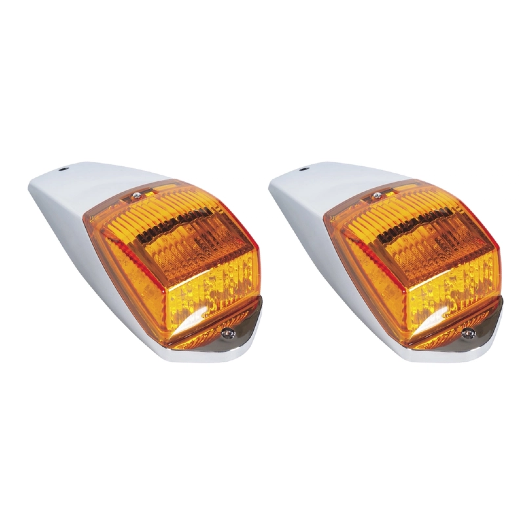
Roof lights are only valuable when they are installed properly. Before ordering, buyers should think about roof layout, mounting position, wiring route, and overall compatibility with the truck. Because this is a high and exposed location, sealing is especially important. A product that looks good in theory can become a problem quickly if the mounting and sealing details are ignored.
This is why the product decision should not stop at lens shape or brightness. Roof compatibility matters. The truck should be able to support the installation cleanly, and the product should match the intended application rather than forcing unnecessary compromise.
Cab roof lights can lose much of their value if installation is careless. Poor wire routing, uneven mounting, or weak sealing can create long-term frustration. A bad installation may lead to inconsistent appearance, reliability concerns, or extra maintenance that makes the lights feel like a mistake instead of an upgrade.
That is why practical buyers think about the whole installation path before ordering. The best outcome comes from combining the right product with the right fit and a clean installation plan.
Roof lights are part of a system, not a substitute for the rest of one. They do not replace side markers, rear lights, or other core visibility functions. Instead, they support the truck’s upper profile while other lights handle side outline, braking communication, and rear recognition.
This is an important way to frame the purchase. Buyers should not think of roof lights as the answer to all truck visibility needs. They are one category inside a larger lighting plan. When they work together with side marker lights, clearance lights, and rear lamps, the truck becomes easier to understand from more angles.
A good truck lighting package feels consistent. The truck should have clear side definition, dependable rear communication, and, where useful, stronger upper-body recognition. When roof lights are chosen with that broader goal in mind, they fit naturally into the whole setup.
That also helps buyers make better decisions about what to upgrade first. If the truck already has weak rear or side visibility, those categories may deserve attention first. If those basics are already in good shape, roof lights may become a more logical next step.
The honest answer is no, but also not always in the same way for every truck. On some trucks, cab roof lights are mainly a finishing touch with limited practical need. On others, especially larger or more heavily used trucks, they contribute meaningfully to upper-body recognition and road presence.
So the value depends on how the truck is used. A buyer who drives at night, works in poor visibility, or wants a more clearly defined truck profile may find real function in roof-mounted lighting. A buyer focused only on decoration may still like the appearance, but the most convincing use case comes when the truck benefits from the added recognition.
The strongest lighting products usually succeed because they combine visual appeal with practical value. Cab roof lights are a good example of that balance. They can improve the roofline visually, but the better reason to add them is that they help the truck present itself more clearly.
That combination is what makes them worth considering. If they only looked good and added nothing else, they would be easier to dismiss. But when they help with presence, recognition, and a more complete lighting layout, they become much more than a cosmetic choice.
Buyer reason | Practical benefit | Visual benefit | Best-fit truck use |
Improve upper vehicle recognition | Helps define truck width and roofline presence | Makes the cab look more complete | Larger trucks and work vehicles |
Add clearer night visibility | Supports better awareness in low light | Creates a cleaner lighting signature | Frequent night driving |
Refresh outdated upper lighting | Restores clearer roof-mounted visibility | Updates truck appearance | Older trucks or replacements |
Build a more complete lighting package | Works with side and rear lights for better overall recognition | Gives the truck a more balanced look | Trucks with broader lighting upgrades |
Cab roof lights are not automatically essential for every truck, but they are not just cosmetic parts either. For buyers who want stronger truck presence, clearer upper-body outline visibility, and a more complete lighting setup, they can offer real value beyond appearance alone. Pingxiang Bowang Industry CO.,LTD supplies practical truck lighting products for different applications, helping customers choose solutions that fit real road use instead of chasing looks without purpose. If you want to improve both the visibility and finish of your truck, contact us today to explore reliable truck cab roof lights for your next upgrade.
No. They can also help improve upper-body recognition and make the truck easier to read on the road, especially on larger or more heavily used vehicles.
Not necessarily. Their value depends on the size of the truck, how often it is driven at night, and whether stronger upper visibility would be useful.
No. Roof lights should work with side markers, clearance lights, and rear lights as part of a complete truck lighting system.
Check mounting position, wiring path, roof compatibility, and sealing requirements. A good product still needs a clean and reliable installation to perform well.