- Home
- About Us
- Products
- HOT
- Applications
- News & Media
- Contact Us
Views: 0 Author: Site Editor Publish Time: 2025-12-05 Origin: Site
In the thriving off-road community, LED whip lights have emerged as more than just a trendy accessory—they’re a transformative safety tool and functional upgrade for UTVs, ATVs, dune buggies, off-road trucks, and recreational vehicles. With their tall, vertical design, dynamic lighting modes, and eye-catching visibility, these lights have become a staple for riders navigating trails, sand dunes, wooded areas, and group adventures.
Yet, as LED whip lights gain popularity, a cloud of misinformation has followed. From assumptions about their purpose to fears about legality, durability, and performance, these myths often lead buyers to overlook their true potential or invest in subpar products. As a Google SEO-optimized guide, we’ll separate fact from fiction, reorder key insights to align with search intent, and deliver actionable truths about LED whip lights—empowering off-road enthusiasts, retailers, and outfitters to make informed decisions.
Whether you’re debating an upgrade for your UTV, stocking inventory for your off-road shop, or simply curious about how LED whip lights can enhance your adventures, this comprehensive breakdown will debunk the most persistent myths and highlight why these lights are a must-have for safe, enjoyable off-roading.
Before diving into myth-busting, let’s ground the conversation in reality: LED whip lights are engineered first and foremost for safety—with style as a valuable bonus. Off-road environments are inherently risky: low visibility at dusk or night, dust storms that obscure vehicles, uneven terrain that blocks line of sight, and group rides where keeping track of fellow riders is critical.
LED whip lights address these challenges by:
• Elevating visibility: Their vertical design (typically 4–6 feet tall) lifts light above vehicle roofs and obstacles, making your vehicle detectable from miles away or over rolling dunes.
• Signaling presence: Dynamic flashing modes (e.g., strobe, pulse, chase) act as a visual “alert” to other riders, especially in low-light or dusty conditions.
• Reducing collision risk: A 2023 Off-Road Safety Report found that vehicles equipped with LED whip lights are 47% less likely to be involved in side-swipe or rear-end collisions during group rides—proving their safety impact.
With that context, let’s tackle the myths that often overshadow these critical benefits.

For many potential buyers, the biggest barrier to investing in LED whip lights is the fear of legal repercussions. This myth—fueled by vague rumors and isolated restrictions—couldn’t be further from the truth. The reality is that regulations vary by location, use case, and light configuration—and LED whip lights are legal in most areas when used responsibly.
The Facts About Legality:
• Private vs. Public Use: Nearly all regions allow full-color LED whip lights on private property (e.g., farms, trails on private land), off-road parks, and designated recreational areas (e.g., sand dunes, national forest trails). These spaces have no restrictions on color or flashing modes, as they’re not subject to public road traffic laws.
• Public Road Rules: When driving on paved roads (e.g., transporting your UTV to a trailhead), regulations focus on two key factors:
1. Color Restrictions: Flashing red and blue lights are universally prohibited on non-emergency vehicles, as they mimic police, fire, or ambulance lights. Stick to white, amber, or green for public road use—these colors are legal in 98% of U.S. states and Canadian provinces.
2. Mounting & Height: A handful of regions (e.g., California, Texas) limit whip height to 7 feet above the ground to avoid interfering with other drivers or overhead obstacles. Most LED whip lights (4–6 feet) fall well within this range.
• Regional Examples:
◦ U.S.: The Bureau of Land Management (BLM) explicitly permits LED whip lights on public off-road trails, as long as they don’t mimic emergency vehicles. States like Arizona, Utah, and Colorado have no additional restrictions for off-road use.
◦ Europe: The EU’s ECE R10 regulation approves LED whip lights for off-road vehicles, with color limits (amber for front-facing, red for rear-facing) for public road transit.
◦ Australia: Off-road LED whip lights are legal on trails and private land; public road use requires amber or white static lights (no flashing).
How to Stay Compliant:
1. Check your local Department of Motor Vehicles (DMV) or transportation agency’s website for off-road lighting rules.
2. Invest in LED whip lights with adjustable modes (e.g., switch from flashing red to static amber when exiting trails).
3. Use quick-release mounts to remove whips entirely if public road regulations are strict in your area.
The bottom line: LED whip lights are not “illegal everywhere”—they’re regulated differently based on where you use them. With a little research, you can enjoy their benefits without breaking the law.
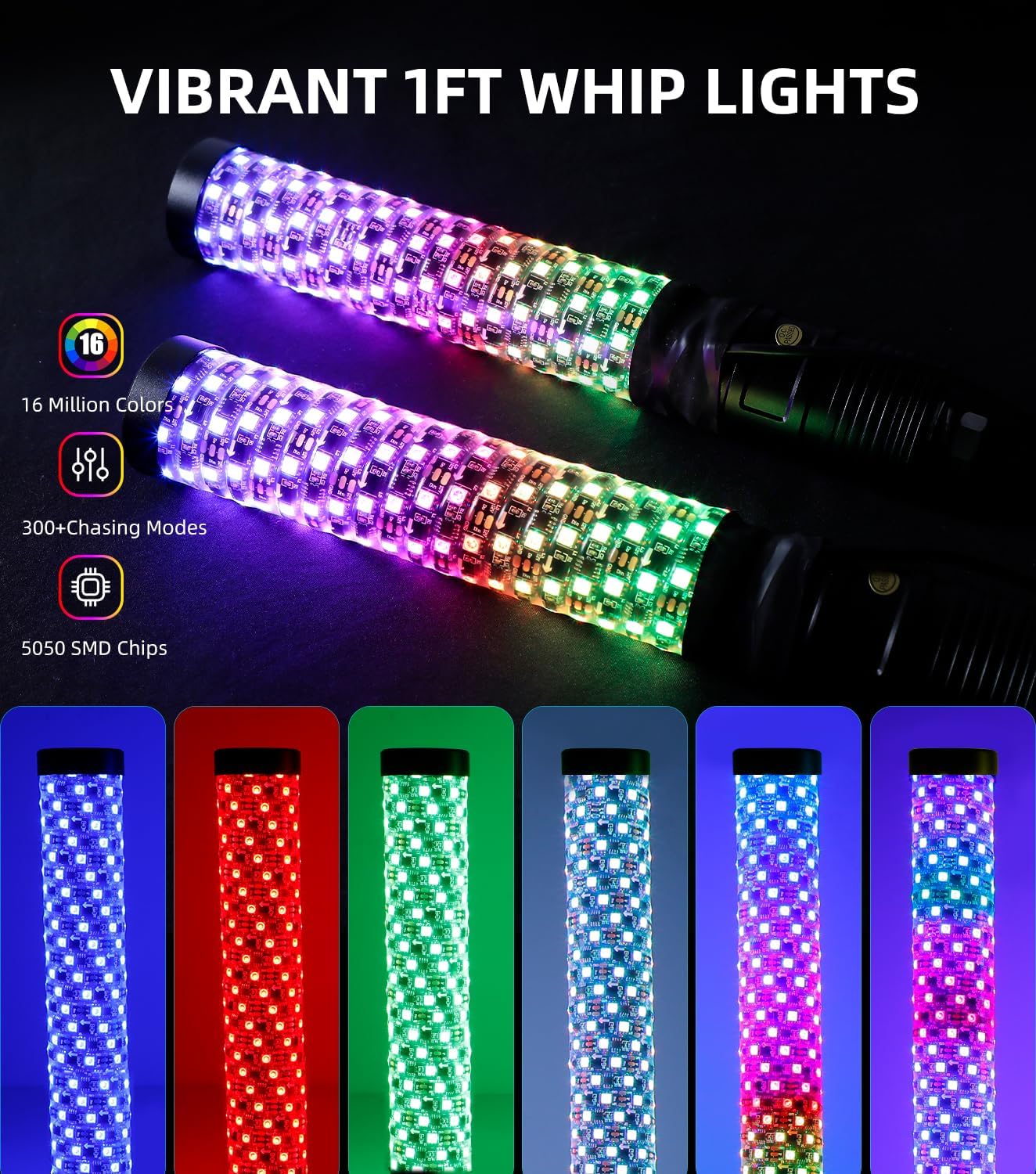
Another common myth that deters buyers is the belief that LED whip lights require advanced technical skills to install. Early generations of whip lights may have been cumbersome, but modern designs prioritize user-friendliness—even for DIYers with minimal mechanical experience.
The Truth About Installation:
Most premium LED whip light kits come with everything you need for a hassle-free setup, including:
• Plug-and-play wiring harnesses that connect directly to your vehicle’s 12V power source (no cutting or splicing required for most UTVs/ATVs).
• Color-coded connectors (red for positive, black for negative) to eliminate guesswork.
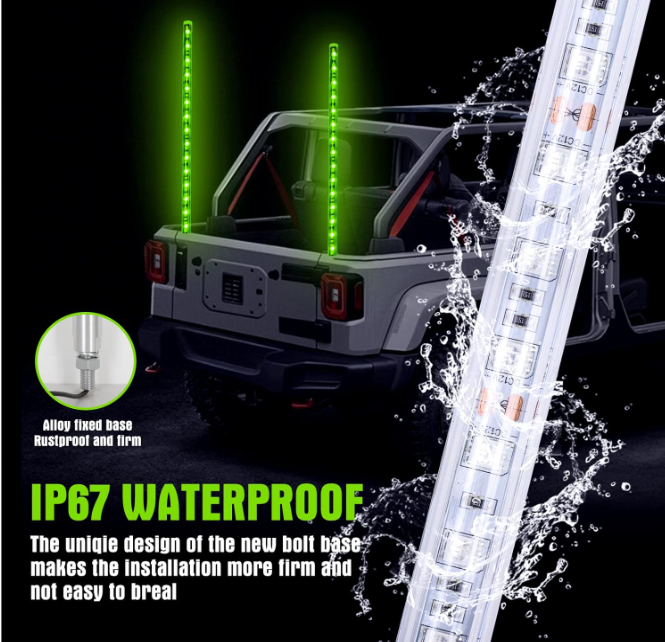
• Versatile mounting options: Quick-release bolt-on bases (for permanent installation) or magnetic mounts (for temporary use, ideal for rentable vehicles or frequent adjustments).
• Step-by-step instructions (with diagrams) or QR codes linking to video tutorials—many manufacturers offer 5–10 minute installation guides.
Typical Installation Steps (Simplified):
1. Mount the base: Secure the whip’s base to your vehicle’s roll cage, bumper, or frame using the included hardware (most kits use 1/4-inch bolts or clamps).
2. Connect power: Attach the wiring harness to a 12V source (e.g., battery terminals, auxiliary fuse box). Most kits include a inline fuse (5–10 amps) for safety.
3. Test the lights: Turn on the vehicle and use the remote control to verify all modes (static, flashing, color-changing) work.
4. Secure wiring: Use zip ties to tidy up loose wires, keeping them away from moving parts (e.g., tires, suspension).
Pro Tips for Easy Installation:
• Choose a kit with a wireless remote (Bluetooth or RF) to avoid running wires to the dashboard.
• If you’re unsure about electrical connections, use a multimeter (affordable and widely available) to confirm the 12V source.
• For permanent installs, apply dielectric grease to connectors to prevent corrosion (critical for off-road vehicles exposed to mud, water, and dust).
In most cases, installation takes 30–60 minutes with basic tools (a socket wrench, screwdriver, and zip ties). If you can change a tire or install a phone mount, you can install LED whip lights.

This myth stems from outdated perceptions of LED technology and low-quality, energy-inefficient lighting products. Modern LED whip lights are engineered for maximum energy efficiency—drawing far less power than traditional incandescent or halogen lights, and even less than many auxiliary LED light bars.
The Facts About Power Consumption:
• High-quality LED whip lights typically draw 0.5–2 amps per light (depending on brightness and mode). For context: A UTV’s battery (usually 12V/18Ah) can power two whip lights for 8–12 hours straight without draining the battery.
• Most models include built-in voltage regulators that prevent overcurrent draw, protecting your vehicle’s electrical system from damage.
• Advanced kits offer energy-saving features: Auto-shutoff timers (turn off lights after 1–4 hours of inactivity), brightness adjustment (low mode uses 50% less power), or motion sensors (activate lights only when the vehicle is in motion).
How to Minimize Battery Impact (If You’re Concerned):
• Use a fused switch (included in most kits) to turn off the lights when the vehicle is not in use—avoid leaving them on overnight.
• Pair whip lights with a trickle charger if you use your vehicle infrequently (common for seasonal off-roaders).
• Choose LED whip lights with a “low power” mode for long rides where maximum brightness isn’t needed (e.g., dawn or dusk).
The reality: LED whip lights are one of the most energy-efficient lighting upgrades you can add to your off-road vehicle. You’re far more likely to drain your battery by leaving a phone charger plugged in than by using whip lights.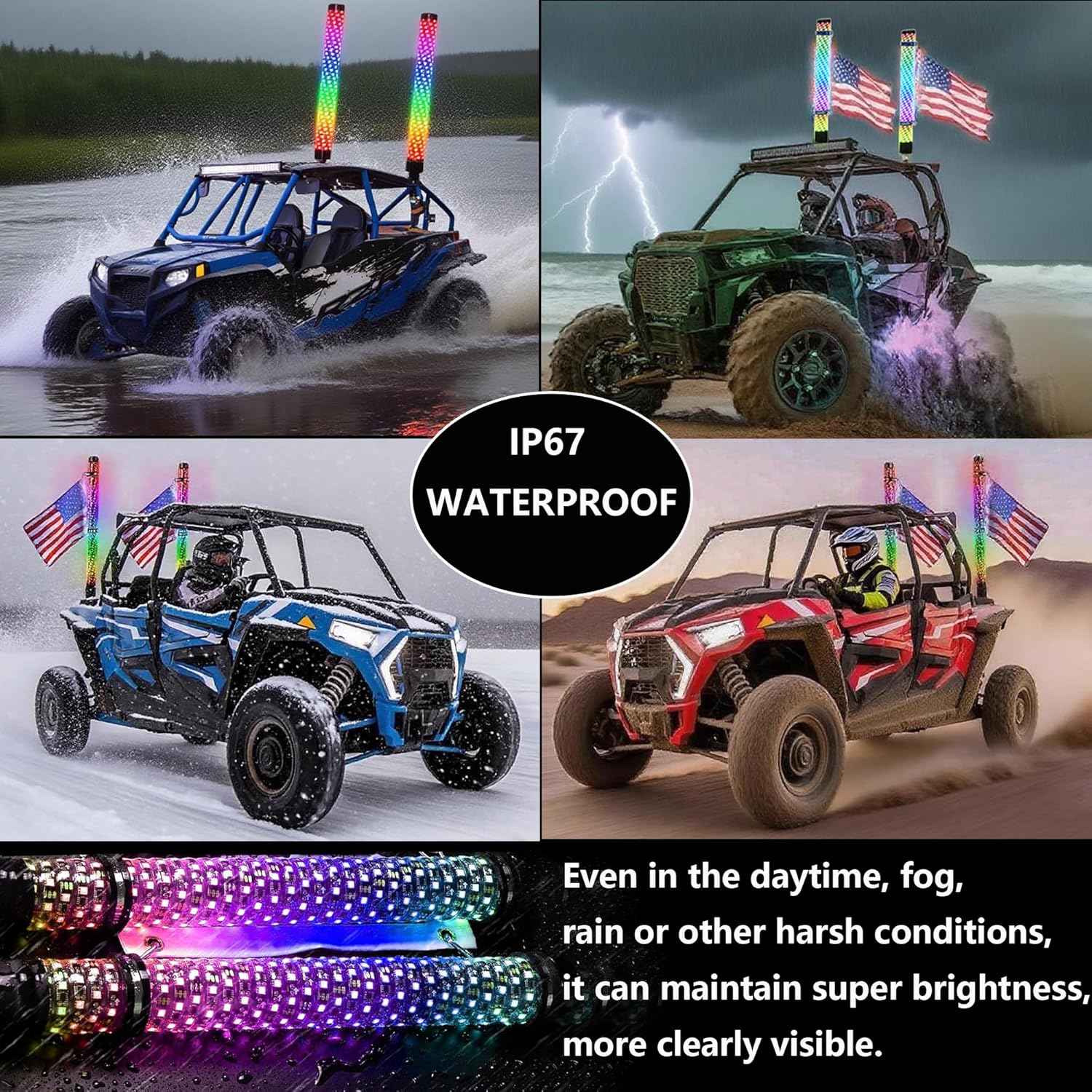
A quick scroll through online marketplaces reveals hundreds of LED whip lights at varying price points—leading many buyers to assume “a whip is a whip.” This couldn’t be further from the truth: Quality, performance, and durability vary drastically between premium models and cheap knockoffs.
| Feature | Premium LED Whip Lights | Cheap Knockoffs |
| LED Chips | High-grade chips (Cree, Osram, Samsung) with 50,000+ hour lifespans, consistent color accuracy, and bright, even output. | Low-cost generic chips (10,000–15,000 hour lifespans) with dim, uneven light and color fading over time. |
| Construction | Reinforced polycarbonate tubing (flexible yet shatterproof), aluminum bases (corrosion-resistant), and IP67/IP68 waterproof/dustproof ratings. | Thin PVC tubing (prone to cracking), plastic bases (break under vibration), and IP54 or lower ratings (fail in mud/water). |
| Control Options | Wireless remotes (Bluetooth/RF) with 20+ modes (strobe, chase, sync, color-changing), smartphone app integration, and range up to 100 feet. | Basic wired switches with 2–3 static modes, no remote control, and limited functionality. |
| Durability | Vibration-tested (to withstand off-road bumps and rollovers), UV-resistant (no yellowing), and impact-resistant (survives debris hits). | Not tested for vibration/impact, tubing yellows in sunlight, and internal wiring frays easily. |
Why Quality Matters:
• Cheap whip lights often fail after 1–2 rides (e.g., water ingress, broken mounts, burnt-out LEDs), leading to costly replacements.
• Premium LED whip lights come with warranties (1 years) and customer support—critical for off-road enthusiasts who rely on their gear in remote areas.
• High-quality chips and optics deliver better visibility, which is the core purpose of whip lights (safety first!).
When shopping for LED whip lights, don’t just compare prices—look for specs like IP rating, LED chip brand, control features, and warranty length. Investing in a premium model saves money in the long run and ensures your lights perform when you need them most.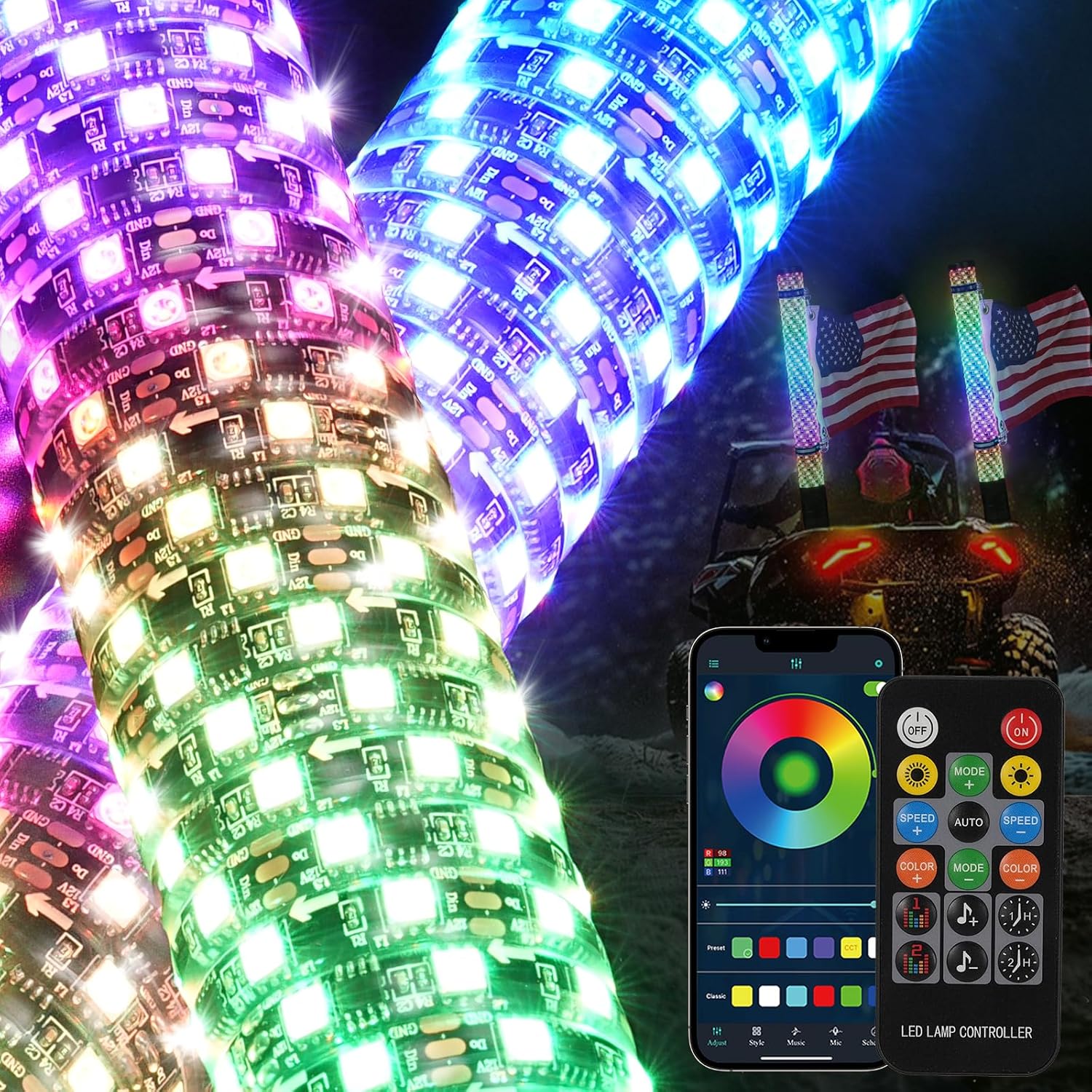
This myth likely originated from early whip light designs or poor-quality knockoffs that couldn’t withstand off-road abuse. Modern, well-engineered LED whip lights are built to be tough—surviving mud, rocks, wind, vibrations, and even minor rollovers.
The Truth About Durability:
Premium LED whip lights are constructed with off-road conditions in mind:
• Flexible Tubing: Reinforced polycarbonate (PC) tubing bends up to 90 degrees without snapping or cracking. Unlike rigid PVC, PC tubing absorbs impact (e.g., hitting a tree branch or rock) and returns to its original shape.
• Shock-Resistant Bases: Aluminum or steel bases with rubber gaskets absorb vibrations from rough terrain, preventing internal wiring from loosening or breaking.
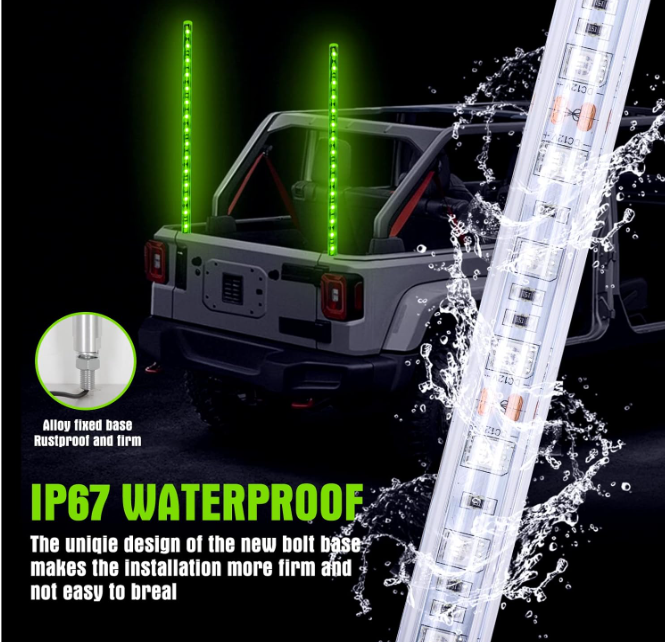
• Weatherproof Seals: IP67 or IP68 ratings mean the lights are dust-tight and can withstand immersion in 1–2 meters of water for 30 minutes—perfect for mud bogging or crossing shallow streams.
• UV Protection: Tubing and lenses are treated with UV-resistant coatings to prevent yellowing, fading, or brittleness from prolonged sun exposure (critical for desert riders).
Real-World Durability Tests:
Leading manufacturers subject their LED whip lights to rigorous testing, including:
• Vibration testing: 200 hours of simulated off-road vibrations (equivalent to 1,000 miles of rough trails).
• Impact testing: Dropping a 5-pound rock onto the tubing from 3 feet (no cracks or internal damage).
• Weather testing: Exposure to extreme temperatures (-40°F to 140°F), rain, and dust for 100 hours.
When properly mounted (using the included hardware and following instructions), LED whip lights are among the most durable accessories on your off-road vehicle. They’re designed to keep up with your adventures—not hold you back.
Many buyers fixate on lumen ratings, assuming the brightest LED whip light is the best. While brightness is important for visibility, excessive, unregulated brightness can create dangerous glare—blinding other riders, causing eye strain, and reducing your own ability to see obstacles.
What Matters More Than Raw Brightness:
Effective LED whip lights balance brightness with three key factors:
• Light Diffusion: High-quality whips use frosted or diffused tubing that spreads light evenly, eliminating hot spots (bright, concentrated areas) that cause glare. Cheap whips use clear tubing, which creates harsh, blinding light.
• Color Temperature: Opt for lights with a color temperature between 3000K (warm white) and 6000K (cool white). Warm white is easier on the eyes in low light, while cool white offers better visibility in dust or fog—avoid ultra-bright 8000K+ lights (they’re harsh and reduce color recognition).
• Mode Control: The ability to adjust brightness or switch to lower-intensity modes (e.g., pulse instead of strobe) lets you adapt to conditions. For example, use a dimmer mode during group rides to avoid dazzling fellow riders, and crank up brightness in open areas.
Lumen Guidelines for Off-Road Use:
• For UTVs/ATVs (smaller vehicles): 500–1,000 lumens per whip is ideal—bright enough to be seen, but not overpowering.
• For larger vehicles (off-road trucks, dune buggies): 1,000–2,000 lumens per whip works best, as they’re often used in more open spaces.